Upcoming Webinar – LinkedIn: Recruiter Secrets

During this Free Webinar You Will Learn:
- How recruiters use LinkedIn to find qualified candidates.
- How recruiters decide who to connect with on LinkedIn.
- How to become one of these sought after candidates.
Burnt out to Brilliant Webinar Series
The 10 Toughest Jobs To Fill In 2016 (And What To Do About It)

Source: Generational Interchanges™
2015 was a challenging year for hiring managers. Regardless of industry and geography, companies struggled to find and keep top talent. Unfortunately, 2016 is predicted to be tougher. According to new data from Career Cast the 10 most difficult jobs to fill in 2016 represent a diversity of industries, levels and functions.
- Data scientists
- Electrical engineers
- General and operations managers
- Home health aide workers
- Information security analysts
- Marketing managers
- Medical services managers
- Physical therapists
- Registered nurses
- Software engineers
Attracting and retaining talent will be the number one human capital challenge of 2016. It will force executives and HR leaders to reassess their needs and priorities and to work together to accomplish key talent objectives. To achieve your recruitment and retention goals for 2016 and beyond, follow these three strategies.
– Amy Hirsh Robinson, Principal, Interchange Group
Workforce Strategies for the New Economy


What is your message to potential employers?
 Hats off to Donnie Grooms. He generated the interest and attention he needed to get a new job that he desperately needs. But this story also highlights a fundamental issue that many people face…he doesn’t say what he’s really looking to do and how he wants to add value to an organization!
If you got the attention of potential employers what would you tell them you’re looking to do? It’s incumbent on us to know what we bring to the table. Here are some questions for you, and Donnie, to consider to help you to be prepared to talk to anyone about what you’d like to be doing in your next position:
- What are you really gifted at – what’s that thing you do without even thinking that helps an organization or individuals be better?
- If you, like Donnie, want to help people, what do you feel most impassioned to help people with? What’s the need that most speaks to you? Donnie spent time and money on chiropractor school, but didn’t complete the certifications necessary to do the real work. I’d love for him to move past that roadblock! But if that’s not an option, maybe targeting wellness or healthcare organizations makes sense.
- What have former employers and co-workers appreciated about you and your contributions? Review what’s worked, and also what hasn’t. Consider creating a job description for yourself that includes those aspects you most enjoy as well as the ‘meat’ of jobs that just comes with the territory…in other words, sometimes we have to accept that admin work, for example, is going to come with the more creative aspects of creating a new program or campaign that we love doing. We may not like that, but we know it will be there. It’s important to include some of the ‘givens’.
- Research job descriptions that appeal to you to discover what skills or technology you need to hit the ground running. This could be daunting, but it’s essential to stay relevant! Online, free tutorials can prepare you to learn and then speak about these skills. Look for Community College or extension classes that may offer low-cost options for learning, or find individuals (even our kids!) who can teach us the tricks of these tools.
Be prepared for your moment in the spotlight, so you can shine effectively!
Read more about Donnie’s story here >>
How do you embrace change?

Check the questions below to see what resonates for you, and see how you can work with change – wanted or unwanted – more effectively.
1) When faced with a change you haven’t asked for do you:
a) Try to find a way to avoid what’s being asked or required of you as long as possible?
b) Think of it as a new learning experience that can help you grow and adjust with it?
c) Consider the change, see if this is compatible with who you are, and decide whether to continue going forward, or determine to go in another direction all together?
d) Go with the flow and know that change happens
If you tend towards a you may experience quite a bit of frustration as changes occur. If this resonates for you perhaps it’s time to seriously listen to your complaining mind to take action that will empower you in new and productive ways. Perhaps there are people who can be a resource to help you adjust at work, or who can be valuable networking ‘partners’ if you are looking for a new place to do what you love to do.
If you tend towards b, and d are you learning what will support you in shifting with the changes that are occurring? Are you connecting with new and established contacts who can support you as you move forward with the new ‘order’? Are there new allies to connect with? New technologies to master?
If you decide to opt out, as in c, and choose to head in a new direction, how will you know what you want? Take a look at what’s missing, or what’s been working, to know what your personal ‘have to haves’ are, and where you’re willing to compromise. Now’s the time for dreaming and taking those dreams seriously. Get busy making a plan that works for you, and put it into action.
Maybe you find you’ll do all of these, for a period of time.
The Case for Humble Executives
The Mindfulness for Emerging Leaders Classes I teach for MBA students focuses on emotional intelligence and surely that includes listening skills.
Here is something from WSJ.com that might interest you:
The Case for Humble Executives
Source: WSJ.com, Author: Joann S. Lublin
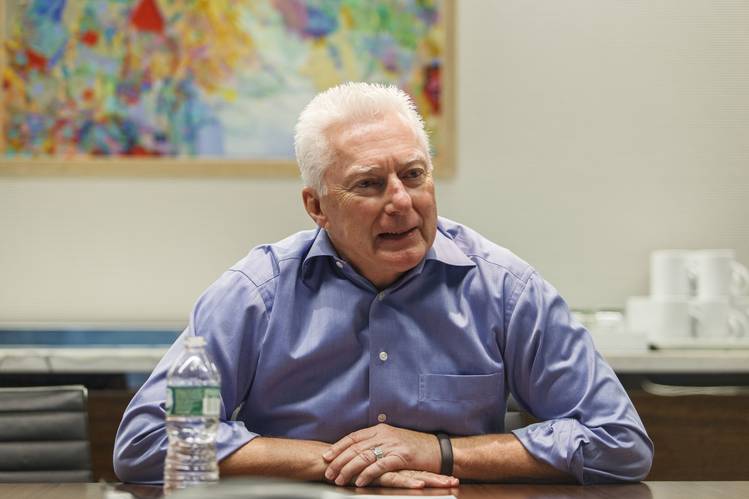
Procter & Gamble’s chief executive, A.G. Lafley, pictured in June, struck a humble tone with shareholders last week.
PHOTO: TIMMY HUYNH/THE WALL STREET JOURNAL
Procter & Gamble Co. Chief Executive A.G. Lafley struck a humble tone during last week’s annual shareholders meeting.
Taking the blame for the consumer-products company’s weak performance, the departing CEO told investors “the buck stops with me” and assured them his successor would do better. Mr. Lafley was responding to investor criticism of P&G’s strategy and recent stock-price performance. He will stay on as executive chairman after David Taylor becomes CEO Nov. 1.
Among executives, humility “is the flavor du jour,” says Fred Hassan,a former CEO of Schering-Plough Corp. and author of a book on leadership. Companies increasingly prize humble leaders because they listen well, admit mistakes and share the limelight, recruiters and coaches say.
“The servant leadership model promotes collaboration,” says Dale E. Jones, chief executive of recruiters Diversified Search Inc.
That’s easier said than done for corporate climbers. At a seminar for aspiring CEOs this year, Mr. Hassan described how they could promote themselves but remain humble, warning them against aggressive self-promotion. For instance, he advises, don’t circumvent the boss and brag about your work to the boss’s boss.
Krispy Kreme Doughnuts Inc. sought a CEO with humble servant leadership during a hunt completed by Mr. Jones last year. Anthony “Tony” N. Thompson, hired to head the chain, “exhibited those two characteristics strongly,” remembers his predecessor, James H. Morgan. Humility represents “an important trait in our company,” adds Mr. Morgan, who remains chairman.
Some may wonder if it is just as good to seem humble.
Faux humility annoys people, explains Francesca Gino, a Harvard Business School professor of business administration who co-wrote a research paper about the shortcomings of “humblebragging,” boasts masquerading as self-deprecating complaints.
Consider the job candidate who says “I work too hard” when asked to describe their shortcomings. Researchers found that opening up about real weaknesses “leads to a better likelihood of getting a job,” she says.
“If you have to act humble, it won’t work. You either are or you’re not,” concurs Mr. Morgan.
Oscar Munoz, the new chief of United Continental Holdings Inc.,started his tenure last month with an apology to customers and employees and a vow to spend his first 90 days on a listening tour with staff. Mr. Munoz suffered a heart attack on Oct. 15, the day he was due to meet with union leaders, and has remained hospitalized.
Frank Blake, a retired chairman and CEO of Home Depot Inc., says he stressed his limited retail-industry experience when directors of the do-it-yourself chain wanted to promote him to the top job in 2007. A General Electric Co. alumnus, he had worked at Home Depot for five years.
“I don’t think I am the right guy,” Mr. Blake recalls warning board members.
Mr. Blake believes his scant retail know-how made it easier to be a humble leader of Home Depot. During his nearly eight-year command, he also favored colleagues with a similar style. “You were better off acknowledging what you needed to work on” than being boastful, he observes.
A Bausch & Lomb division head in “self-promotion mode” wound up getting ousted a few years ago, recollects Mr. Hassan, its then-chairman.
Recruited from a much bigger employer, the division head at the eye-products concern pushed to expand into product areas that would impress the board, but his division needed a turnaround, Mr. Hassan says. Subordinates complained that he ignored their problems, such as repairing ties with certain customers. “Had he been humble,” Mr. Hassan notes, “he would have set the right priorities.”
Some executives spend years developing humble listening skills—asWilliam M. Lambert did before and after his 2008 advancement to CEO of MSA Safety Inc., a maker and supplier of safety products.
Bob Rogers, president of Development Dimensions International, a leadership consultancy, began coaching him when he took charge of MSA’s North American unit in 2003. Mr. Rogers counted how often Mr. Lambert told his management team what to do rather than request their input. He issued orders a lot.
His team members told the coach that “Bill has preconceived ideas and he doesn’t allow for full discussion,” Mr. Lambert remembers. The executive asked a trusted peer to check his behavior.
Nevertheless, directors told Mr. Lambert he came across as overconfident and unwilling to listen during his second year in the corner office. His reviews improved after he showed respect for board members’ ideas.
“As a leader, you need to have a strong ego,” Mr. Lambert says. “But you can’t have a big ego.”
It should go without saying that humble leaders don’t steal credit from colleagues. “Credit when you do well will come to you,” Krispy Kreme’s Mr. Morgan says he used to assure his executives. Not everyone listened.
One lieutenant disappeared while subordinates developed new products and equipment, only to claim credit when they were unveiled to the top brass.
“He took the limelight,” Mr. Morgan recalls. “He didn’t understand the humility part.” Krispy Kreme fired the man a year later.
Client Success Story: Kathleen

Like many recent college graduates, I felt lost and alone. I craved to establish a sense of belonging. Afraid to admit my shortcomings, I withdrew into myself. Negative self-talk like, “you are not good enough, smart enough, qualified enough” dominated my thinking. Social gatherings became less desirable. I did everything I could to avoid the dreaded question, “So what do you do?” I did not know this person. Where was the determined young woman I worked so hard to become?
After a lay off and months of sitting in my pajamas feeling down on myself, I finally had enough. I started researching career counselors in the Los Angeles area, which is how I discovered Daisy Swan. From the beginning Daisy put me at ease with her warm demeanor. She encouraged me to reflect on my values instead of focusing on my fear. I knew I wanted to work with and empower people, but I was not sure in what capacity. With a new sense of determination I began to research and apply to nonprofits and fellowships locally and abroad.
I applied to the AmeriCorps National Teaching Fellowship and was immediately contacted for an interview. I became proactive instead of inactive. I followed up every interview round via LinkedIn and email. I reached out to my new contacts to discuss their experiences with the program and for interview advice. Four interview rounds later, I am happy to say I accepted an AmeriCorps Teaching Fellow in the Bay Area.
I graduated almost exactly a year ago. Up till this point it seemed like every day was slipping away from me. The possibility of successfully making the transition from college to a career appeared out of reach. I whole-heartedly believe there are lessons to be learned in our darkest hours. First, do not be afraid to ask for help, especially when times are hard. Second, do not let others dictate how you lead your life. Finally, let your values guide your aspirations. I am beyond grateful for Daisy’s support during these uncertain times. I finally feel like I am on my way to the meaningful career and life I intended.
Downtime Productivity
Recently, I was a panelist and guest of The Society of Composers & Lyricists (SCL), in a conversation about Downtime Productivity. You know, that time that you have when things are a little quiet at work – no matter if you’re working for someone else, or for yourself?
We all have those lull times when we might slip into a sort of sleepy boredom/depression, or maybe it rears its head for you, like a frantic anxiety of, ‘OH NO! Why is this happening??!’ On this May 20th panel, we discussed these common reactions to downtime. So, what to do? Read on for some helpful tips.
Four tips to live with – and learn to love – downtime productivity, when it strikes:
1) Give yourself a break and nurture yourself back to health. If you’ve been working hard for a while it may be time to take your foot off the pedal, and coast a little bit. This downtime won’t last forever, so if you need a little extra sleep, some time to read and reflect, do it!
2) Keep a list of all of the projects that you wish you could work on, when you’re in your busy times. When the lull comes, turn to your list and start having some fun ‘getting’ to these projects. This list can steer you clear of wasting time watching daytime TV, or aimlessly shopping online! And you’ll have interesting projects to talk about with friends and colleagues.
3) Talk to your peeps. Great time to reach out to your former colleagues, friends, and new sources of professional information. Do you have time to go to a conference? Go! An association meeting, or a meet-up about specific areas of interest? Go! Now’s the time to engage.
4) Learn something new. We all need to be lifelong learners these days, and the options for taking a class are plentiful. Community college, extension programs, online…or a combination. Degree, certificate, or one-time workshops provide an excellent way to update your skills for the work you do now, or you can work on developing that ‘Plan B’ skill set that will serve you when you’re ready to transition to the next chapter of your life.
Upcoming Webinar – LinkedIn: Recruiter Secrets
During this Free Webinar You Will Learn:
- How recruiters use LinkedIn to find qualified candidates.
- How recruiters decide who to connect with on LinkedIn.
- How to become one of these sought after candidates.
Burnt out to Brilliant Webinar Series
The 10 Toughest Jobs To Fill In 2016 (And What To Do About It)
Source: Generational Interchanges™
2015 was a challenging year for hiring managers. Regardless of industry and geography, companies struggled to find and keep top talent. Unfortunately, 2016 is predicted to be tougher. According to new data from Career Cast the 10 most difficult jobs to fill in 2016 represent a diversity of industries, levels and functions.
- Data scientists
- Electrical engineers
- General and operations managers
- Home health aide workers
- Information security analysts
- Marketing managers
- Medical services managers
- Physical therapists
- Registered nurses
- Software engineers
Attracting and retaining talent will be the number one human capital challenge of 2016. It will force executives and HR leaders to reassess their needs and priorities and to work together to accomplish key talent objectives. To achieve your recruitment and retention goals for 2016 and beyond, follow these three strategies.
– Amy Hirsh Robinson, Principal, Interchange Group
Workforce Strategies for the New Economy
What is your message to potential employers?
Hats off to Donnie Grooms. He generated the interest and attention he needed to get a new job that he desperately needs. But this story also highlights a fundamental issue that many people face…he doesn’t say what he’s really looking to do and how he wants to add value to an organization!
If you got the attention of potential employers what would you tell them you’re looking to do? It’s incumbent on us to know what we bring to the table. Here are some questions for you, and Donnie, to consider to help you to be prepared to talk to anyone about what you’d like to be doing in your next position:
- What are you really gifted at – what’s that thing you do without even thinking that helps an organization or individuals be better?
- If you, like Donnie, want to help people, what do you feel most impassioned to help people with? What’s the need that most speaks to you? Donnie spent time and money on chiropractor school, but didn’t complete the certifications necessary to do the real work. I’d love for him to move past that roadblock! But if that’s not an option, maybe targeting wellness or healthcare organizations makes sense.
- What have former employers and co-workers appreciated about you and your contributions? Review what’s worked, and also what hasn’t. Consider creating a job description for yourself that includes those aspects you most enjoy as well as the ‘meat’ of jobs that just comes with the territory…in other words, sometimes we have to accept that admin work, for example, is going to come with the more creative aspects of creating a new program or campaign that we love doing. We may not like that, but we know it will be there. It’s important to include some of the ‘givens’.
- Research job descriptions that appeal to you to discover what skills or technology you need to hit the ground running. This could be daunting, but it’s essential to stay relevant! Online, free tutorials can prepare you to learn and then speak about these skills. Look for Community College or extension classes that may offer low-cost options for learning, or find individuals (even our kids!) who can teach us the tricks of these tools.
Be prepared for your moment in the spotlight, so you can shine effectively!
Read more about Donnie’s story here >>
How do you embrace change?
Check the questions below to see what resonates for you, and see how you can work with change – wanted or unwanted – more effectively.
1) When faced with a change you haven’t asked for do you:
a) Try to find a way to avoid what’s being asked or required of you as long as possible?
b) Think of it as a new learning experience that can help you grow and adjust with it?
c) Consider the change, see if this is compatible with who you are, and decide whether to continue going forward, or determine to go in another direction all together?
d) Go with the flow and know that change happens
If you tend towards a you may experience quite a bit of frustration as changes occur. If this resonates for you perhaps it’s time to seriously listen to your complaining mind to take action that will empower you in new and productive ways. Perhaps there are people who can be a resource to help you adjust at work, or who can be valuable networking ‘partners’ if you are looking for a new place to do what you love to do.
If you tend towards b, and d are you learning what will support you in shifting with the changes that are occurring? Are you connecting with new and established contacts who can support you as you move forward with the new ‘order’? Are there new allies to connect with? New technologies to master?
If you decide to opt out, as in c, and choose to head in a new direction, how will you know what you want? Take a look at what’s missing, or what’s been working, to know what your personal ‘have to haves’ are, and where you’re willing to compromise. Now’s the time for dreaming and taking those dreams seriously. Get busy making a plan that works for you, and put it into action.
Maybe you find you’ll do all of these, for a period of time.
The Case for Humble Executives
The Mindfulness for Emerging Leaders Classes I teach for MBA students focuses on emotional intelligence and surely that includes listening skills.
Here is something from WSJ.com that might interest you:
The Case for Humble Executives
Source: WSJ.com, Author: Joann S. Lublin
Procter & Gamble’s chief executive, A.G. Lafley, pictured in June, struck a humble tone with shareholders last week.
PHOTO: TIMMY HUYNH/THE WALL STREET JOURNAL
Procter & Gamble Co. Chief Executive A.G. Lafley struck a humble tone during last week’s annual shareholders meeting.
Taking the blame for the consumer-products company’s weak performance, the departing CEO told investors “the buck stops with me” and assured them his successor would do better. Mr. Lafley was responding to investor criticism of P&G’s strategy and recent stock-price performance. He will stay on as executive chairman after David Taylor becomes CEO Nov. 1.
Among executives, humility “is the flavor du jour,” says Fred Hassan,a former CEO of Schering-Plough Corp. and author of a book on leadership. Companies increasingly prize humble leaders because they listen well, admit mistakes and share the limelight, recruiters and coaches say.
“The servant leadership model promotes collaboration,” says Dale E. Jones, chief executive of recruiters Diversified Search Inc.
That’s easier said than done for corporate climbers. At a seminar for aspiring CEOs this year, Mr. Hassan described how they could promote themselves but remain humble, warning them against aggressive self-promotion. For instance, he advises, don’t circumvent the boss and brag about your work to the boss’s boss.
Krispy Kreme Doughnuts Inc. sought a CEO with humble servant leadership during a hunt completed by Mr. Jones last year. Anthony “Tony” N. Thompson, hired to head the chain, “exhibited those two characteristics strongly,” remembers his predecessor, James H. Morgan. Humility represents “an important trait in our company,” adds Mr. Morgan, who remains chairman.
Some may wonder if it is just as good to seem humble.
Faux humility annoys people, explains Francesca Gino, a Harvard Business School professor of business administration who co-wrote a research paper about the shortcomings of “humblebragging,” boasts masquerading as self-deprecating complaints.
Consider the job candidate who says “I work too hard” when asked to describe their shortcomings. Researchers found that opening up about real weaknesses “leads to a better likelihood of getting a job,” she says.
“If you have to act humble, it won’t work. You either are or you’re not,” concurs Mr. Morgan.
Oscar Munoz, the new chief of United Continental Holdings Inc.,started his tenure last month with an apology to customers and employees and a vow to spend his first 90 days on a listening tour with staff. Mr. Munoz suffered a heart attack on Oct. 15, the day he was due to meet with union leaders, and has remained hospitalized.
Frank Blake, a retired chairman and CEO of Home Depot Inc., says he stressed his limited retail-industry experience when directors of the do-it-yourself chain wanted to promote him to the top job in 2007. A General Electric Co. alumnus, he had worked at Home Depot for five years.
“I don’t think I am the right guy,” Mr. Blake recalls warning board members.
Mr. Blake believes his scant retail know-how made it easier to be a humble leader of Home Depot. During his nearly eight-year command, he also favored colleagues with a similar style. “You were better off acknowledging what you needed to work on” than being boastful, he observes.
A Bausch & Lomb division head in “self-promotion mode” wound up getting ousted a few years ago, recollects Mr. Hassan, its then-chairman.
Recruited from a much bigger employer, the division head at the eye-products concern pushed to expand into product areas that would impress the board, but his division needed a turnaround, Mr. Hassan says. Subordinates complained that he ignored their problems, such as repairing ties with certain customers. “Had he been humble,” Mr. Hassan notes, “he would have set the right priorities.”
Some executives spend years developing humble listening skills—asWilliam M. Lambert did before and after his 2008 advancement to CEO of MSA Safety Inc., a maker and supplier of safety products.
Bob Rogers, president of Development Dimensions International, a leadership consultancy, began coaching him when he took charge of MSA’s North American unit in 2003. Mr. Rogers counted how often Mr. Lambert told his management team what to do rather than request their input. He issued orders a lot.
His team members told the coach that “Bill has preconceived ideas and he doesn’t allow for full discussion,” Mr. Lambert remembers. The executive asked a trusted peer to check his behavior.
Nevertheless, directors told Mr. Lambert he came across as overconfident and unwilling to listen during his second year in the corner office. His reviews improved after he showed respect for board members’ ideas.
“As a leader, you need to have a strong ego,” Mr. Lambert says. “But you can’t have a big ego.”
It should go without saying that humble leaders don’t steal credit from colleagues. “Credit when you do well will come to you,” Krispy Kreme’s Mr. Morgan says he used to assure his executives. Not everyone listened.
One lieutenant disappeared while subordinates developed new products and equipment, only to claim credit when they were unveiled to the top brass.
“He took the limelight,” Mr. Morgan recalls. “He didn’t understand the humility part.” Krispy Kreme fired the man a year later.
Client Success Story: Peter
I was very fortunate to work with Daisy as I was retooling my resume and improving my interviewing skills. She always had the appropriate and useful comment for any issue I presented. Equally important, she did not use kid-gloves, but rather told me what I needed to hear. I felt she took a sincere interest in my goals and potential and showed leadership, yes, she lead me to a more marketable position as a candidate. Indeed, only one month after our sessions ended, I was offered a position.
– Peter, NJ 8/2014
Client Success Story: Jeff
My experience with Daisy was exceptional, and exceeded my expectations. I came to her seeking advice about how to take the next step in my career. She helped me clarify my personal and professional goals, and helped me visualize a career path that met my personal and professional goals.
Daisy also helped me see that the perfect role was out there for me, and worked with me on a strategy to find it. Her care, diligence, and thoughtful advice were invaluable throughout the entire process, from career exploration to offer and acceptance.
I highly recommend Daisy Swan for anyone looking to grow as a professional.
– Jeff, May 2015
Client Success Story: Kathleen
Like many recent college graduates, I felt lost and alone. I craved to establish a sense of belonging. Afraid to admit my shortcomings, I withdrew into myself. Negative self-talk like, “you are not good enough, smart enough, qualified enough” dominated my thinking. Social gatherings became less desirable. I did everything I could to avoid the dreaded question, “So what do you do?” I did not know this person. Where was the determined young woman I worked so hard to become?
After a lay off and months of sitting in my pajamas feeling down on myself, I finally had enough. I started researching career counselors in the Los Angeles area, which is how I discovered Daisy Swan. From the beginning Daisy put me at ease with her warm demeanor. She encouraged me to reflect on my values instead of focusing on my fear. I knew I wanted to work with and empower people, but I was not sure in what capacity. With a new sense of determination I began to research and apply to nonprofits and fellowships locally and abroad.
I applied to the AmeriCorps National Teaching Fellowship and was immediately contacted for an interview. I became proactive instead of inactive. I followed up every interview round via LinkedIn and email. I reached out to my new contacts to discuss their experiences with the program and for interview advice. Four interview rounds later, I am happy to say I accepted an AmeriCorps Teaching Fellow in the Bay Area.
I graduated almost exactly a year ago. Up till this point it seemed like every day was slipping away from me. The possibility of successfully making the transition from college to a career appeared out of reach. I whole-heartedly believe there are lessons to be learned in our darkest hours. First, do not be afraid to ask for help, especially when times are hard. Second, do not let others dictate how you lead your life. Finally, let your values guide your aspirations. I am beyond grateful for Daisy’s support during these uncertain times. I finally feel like I am on my way to the meaningful career and life I intended.
Downtime Productivity
Recently, I was a panelist and guest of The Society of Composers & Lyricists (SCL), in a conversation about Downtime Productivity. You know, that time that you have when things are a little quiet at work – no matter if you’re working for someone else, or for yourself?
We all have those lull times when we might slip into a sort of sleepy boredom/depression, or maybe it rears its head for you, like a frantic anxiety of, ‘OH NO! Why is this happening??!’ On this May 20th panel, we discussed these common reactions to downtime. So, what to do? Read on for some helpful tips.
Four tips to live with – and learn to love – downtime productivity, when it strikes:
1) Give yourself a break and nurture yourself back to health. If you’ve been working hard for a while it may be time to take your foot off the pedal, and coast a little bit. This downtime won’t last forever, so if you need a little extra sleep, some time to read and reflect, do it!
2) Keep a list of all of the projects that you wish you could work on, when you’re in your busy times. When the lull comes, turn to your list and start having some fun ‘getting’ to these projects. This list can steer you clear of wasting time watching daytime TV, or aimlessly shopping online! And you’ll have interesting projects to talk about with friends and colleagues.
3) Talk to your peeps. Great time to reach out to your former colleagues, friends, and new sources of professional information. Do you have time to go to a conference? Go! An association meeting, or a meet-up about specific areas of interest? Go! Now’s the time to engage.
4) Learn something new. We all need to be lifelong learners these days, and the options for taking a class are plentiful. Community college, extension programs, online…or a combination. Degree, certificate, or one-time workshops provide an excellent way to update your skills for the work you do now, or you can work on developing that ‘Plan B’ skill set that will serve you when you’re ready to transition to the next chapter of your life.